Bluestone Patio Installation on Long Island: Cost, Design & What to Expect
Bluestone is Long Island's signature outdoor stone — and for good reason. It's durable, beautiful, and handles the region's freeze-thaw cycles better than almost any other natural stone. If you're planning a patio, pool coping, walkway, or outdoor living area, here's everything you need to know about bluestone on Long Island.
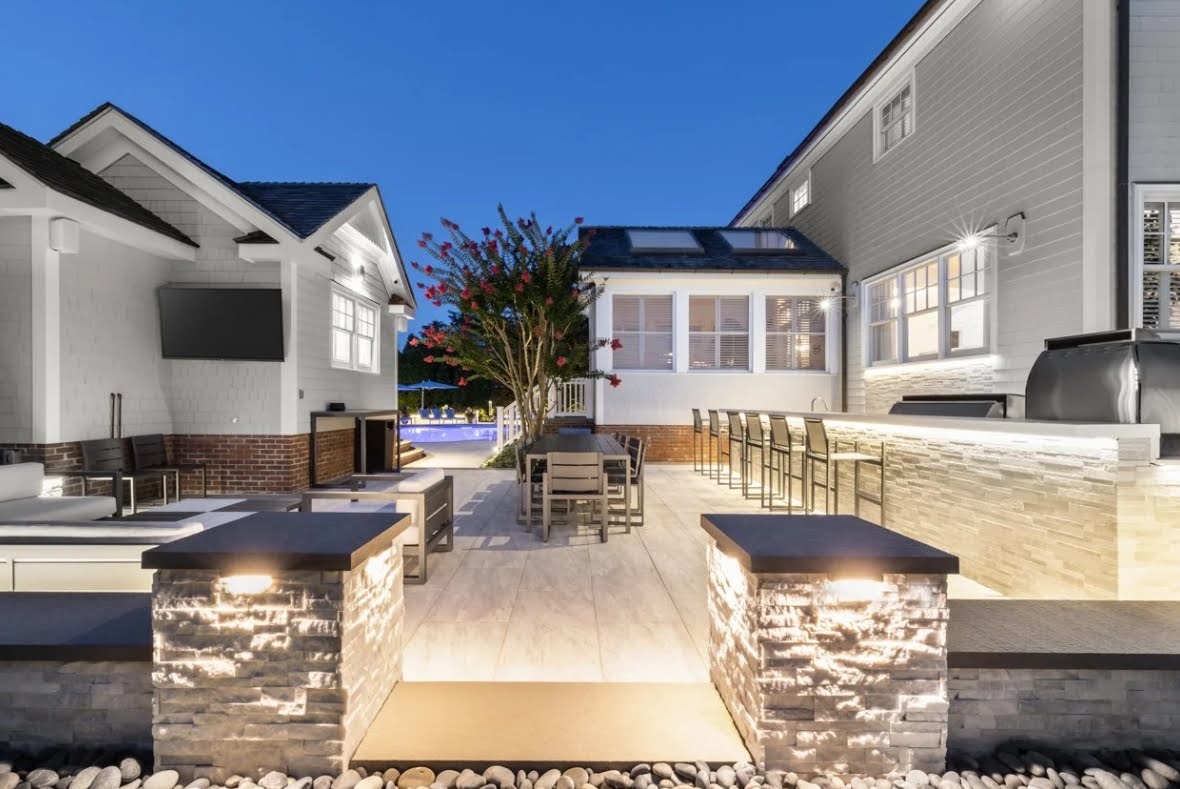
Why Bluestone Dominates Long Island Outdoor Design
Bluestone is a type of sandstone quarried primarily in New York and Pennsylvania. Its blue-gray color, natural cleft texture, and exceptional durability have made it the material of choice for Long Island patios, pool decks, walkways, and steps for decades. You'll find it on estates in Sands Point, pool decks in Dix Hills, and front walkways in virtually every upscale neighborhood across Nassau and Suffolk County.
What makes bluestone particularly well-suited to Long Island is its frost resistance. Unlike some natural stones that crack and spall through repeated freeze-thaw cycles, properly installed bluestone handles Long Island winters reliably. It also stays cool underfoot in summer heat — a significant advantage around pool areas where barefoot traffic is constant.
Types of Bluestone Finishes
Bluestone comes in several finish options, each with different aesthetics and practical considerations:
Natural Cleft
The stone is split along its natural grain, leaving a textured, slightly uneven surface. This is the most traditional look — rustic and natural. Excellent slip resistance. Best for patios, walkways, and steps.
Thermal / Flamed
The surface is exposed to high heat, which opens the grain and creates a rough, non-slip texture. More uniform than natural cleft. Popular for pool decks and areas with heavy foot traffic.
Honed
The surface is ground smooth, creating a flat, matte finish. More contemporary look. Slightly less slip resistant when wet — less ideal for pool decks but beautiful for covered patios and outdoor dining areas.
Sawn
Cut to precise dimensions with smooth, consistent edges. Creates a clean, modern look with tight joints. Popular for contemporary designs and large-format installations.
Bluestone Patio Cost on Long Island
Bluestone patio costs on Long Island are higher than national averages due to labor costs, material transportation, and the complexity of working in established residential neighborhoods. Here's a realistic breakdown:
| Project Type | Cost Range | Notes |
|---|---|---|
| Patio (installed) | $35–$65 per sq ft | Includes material, base prep, and installation |
| Pool coping | $45–$75 per linear ft | Includes cutting, fitting, and mortar setting |
| Walkway | $40–$70 per sq ft | Depends on width, pattern, and base conditions |
| Steps | $800–$1,500 per step | Custom cut risers and treads |
| Retaining wall cap | $50–$90 per linear ft | Bluestone cap on CMU or stone wall |
A typical 600–800 square foot patio with bluestone on Long Island runs $25,000–$50,000 installed, depending on the finish, pattern, and site conditions. Projects that include pool coping, steps, and walkways in the same material will see a lower per-square-foot cost due to material and mobilization efficiencies.
The Installation Process
A properly installed bluestone patio is built from the ground up. The base preparation is just as important as the stone itself — a poorly prepared base will lead to settling, cracking, and heaving within a few years. Here's what a proper installation looks like:
Excavation
The existing soil is excavated to a depth of 8–12 inches, depending on soil conditions and the weight of the stone.
Gravel Base
A compacted gravel base (typically 6–8 inches of crushed stone) is installed to provide drainage and a stable foundation.
Sand or Mortar Setting Bed
A 1-inch sand bed (for dry-set) or mortar bed (for wet-set) is prepared. Wet-set is more durable for pool coping and areas with heavy loads.
Stone Layout
The bluestone is laid out dry first to check the pattern, cuts, and fit before any mortar is applied.
Setting and Grouting
Stones are set in mortar and grouted with a matching or contrasting joint material. Joint width and color significantly affect the final appearance.
Sealing
A penetrating sealer is applied to protect the stone from staining and moisture infiltration. Resealing every 3–5 years is recommended.
Design Patterns and Layout Options
Bluestone can be installed in several patterns, each creating a different visual effect:
Random Irregular
Irregular-shaped pieces fitted together like a puzzle. Classic, natural look. Labor-intensive but creates a timeless result.
Ashlar
Rectangular pieces in varying sizes arranged in a pattern. More contemporary than random irregular, more traditional than running bond.
Running Bond
Uniform rectangular pieces offset like brickwork. Clean, modern look. Most efficient to install.
Herringbone
Rectangular pieces arranged in a V-pattern. Distinctive and directional — works well for walkways and driveways.
Versailles
Four different sizes arranged in a repeating pattern. Formal, elegant look popular in estate settings.
Large Format
24×24 or larger slabs with minimal joints. Very contemporary. Requires precise base preparation and skilled installation.
Maintenance and Longevity
Properly installed bluestone requires minimal maintenance and will last 50+ years. Here's what to expect:
Annual cleaning: Sweep regularly and wash with a mild detergent and water annually. Avoid acidic cleaners (vinegar, muriatic acid) which can etch the stone surface.
Sealing: Apply a penetrating sealer every 3–5 years to protect against staining from pool chemicals, food, and organic matter. This is especially important for patios adjacent to pools.
Joint maintenance: Mortar joints may need repointing after 15–20 years. This is a normal part of masonry maintenance and is straightforward for a qualified contractor.
Efflorescence: A white mineral deposit may appear on new bluestone in the first year. This is normal and typically disappears with weathering. It can be removed with a commercial efflorescence cleaner if needed.
Ready to Install Bluestone on Your Long Island Property?
Cardi Design & Build installs bluestone patios, pool coping, walkways, and steps across Nassau County and Suffolk County. Get a free estimate today.