Summer Drought-Tolerant Landscaping on Long Island: Plants, Design & Water-Smart Strategies
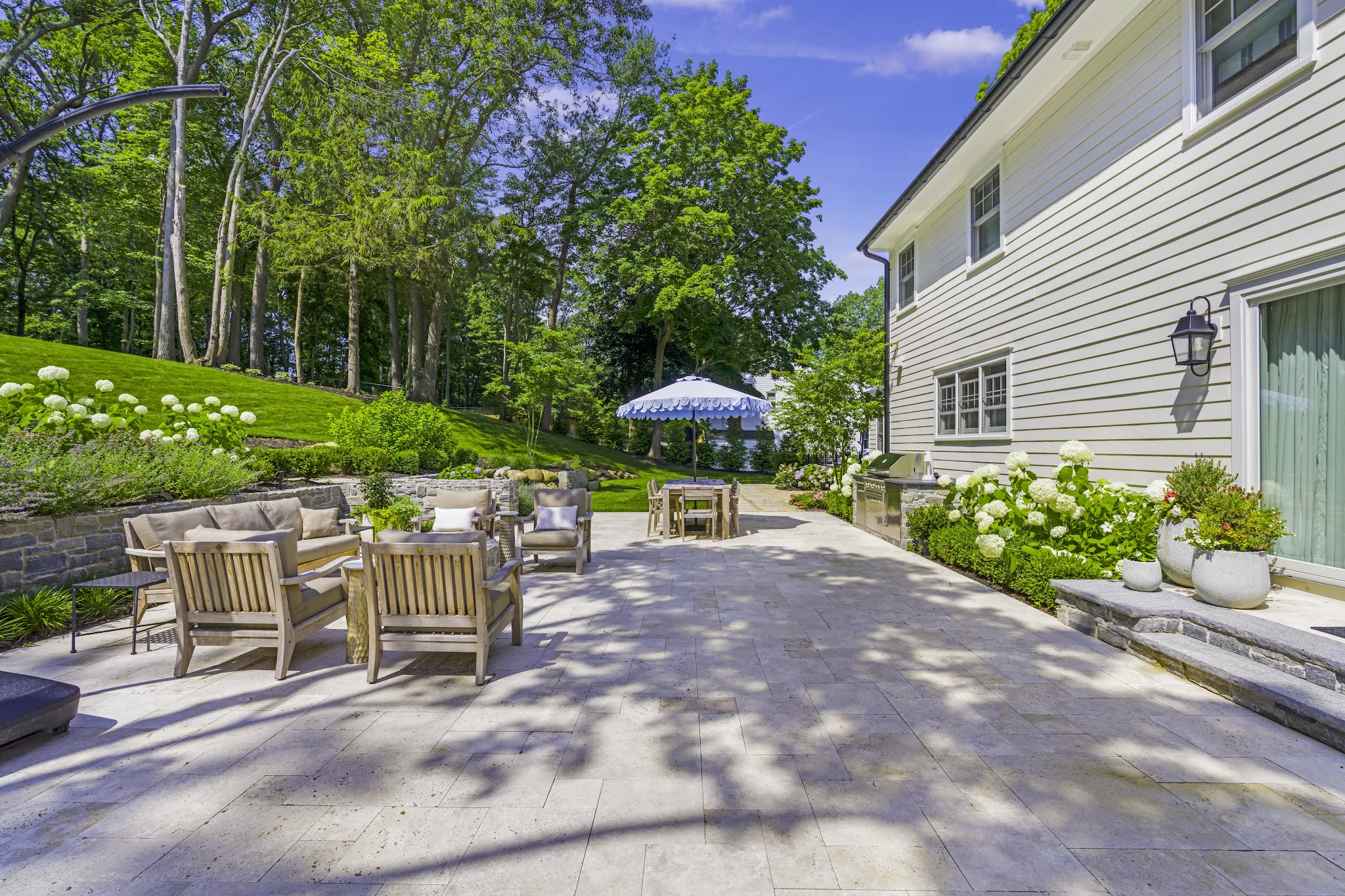
Long Island summers are getting hotter and drier. Water restrictions in Nassau and Suffolk County are increasingly common, and irrigation costs have climbed significantly over the past decade. The good news: a well-designed drought-tolerant landscape doesn't look sparse or utilitarian — it can be lush, layered, and genuinely beautiful while cutting your water use by 40–60% compared to a conventional turf-heavy yard.
Why Drought-Tolerant Landscaping Makes Sense on Long Island
Long Island sits in USDA Hardiness Zone 7a–7b, with warm, humid summers and periodic dry spells that can stretch for weeks. The sandy, well-drained soils that dominate much of Nassau and Suffolk County — particularly on the North Shore and in the Hamptons — drain quickly and hold little moisture, which means even a week without rain can stress conventional plantings.
At the same time, municipal water restrictions have become more frequent. The Long Island Water Conference and individual water districts regularly issue conservation advisories during summer months, and irrigation systems that run daily can generate significant utility costs — often $200–$400 per month during peak season for a typical half-acre property.
Drought-tolerant design addresses both problems at once. By selecting plants adapted to Long Island's climate and soil conditions, and by designing the landscape to capture and retain moisture naturally, you can maintain a beautiful yard with far less supplemental irrigation — and far less ongoing maintenance.
The Best Drought-Tolerant Plants for Long Island
The most successful drought-tolerant landscapes on Long Island combine native plants with well-adapted ornamentals that thrive in the region's specific conditions. The following categories represent the core palette we use in our designs.
Native Perennials & Grasses
Native plants are the foundation of any water-smart landscape because they evolved in Long Island's climate and require little to no supplemental irrigation once established. Our most-used natives include:
Ornamental grass with striking blue-green summer color turning copper-red in fall. Thrives in sandy soil, full sun. Exceptional drought tolerance.
Cheerful yellow blooms from July through September. Self-seeds readily, creating natural drifts. Tolerates poor, dry soil.
Long-blooming perennial with deep taproots that access subsoil moisture. Attracts pollinators and birds. Very low maintenance once established.
Deep-rooted native legume with stunning blue flower spikes in spring. Virtually indestructible once established — no irrigation needed after year two.
Tall, airy ornamental grass that moves beautifully in the breeze. 'Shenandoah' cultivar turns brilliant red in fall. Tolerates wet or dry conditions.
Late-season bloomer that thrives in Long Island's coastal conditions. Excellent for sandy soils and salt spray tolerance.
Drought-Tolerant Shrubs
Shrubs provide structure and year-round interest. These perform reliably in Long Island's summer heat with minimal irrigation:
Native evergreen shrub with glossy foliage. Tolerates both wet and dry conditions — ideal for the varied drainage conditions found across Long Island properties.
Tough native shrub with aromatic foliage and waxy berries. Thrives in sandy, infertile soil. Excellent for coastal properties and North Shore estates.
Compact native shrub with fragrant spring flowers and spectacular fall color. Extremely low maintenance, no irrigation needed once established.
Not a true sage, but one of the most drought-tolerant ornamentals available. Silvery stems and lavender-blue flowers from July through September. Thrives in poor, dry soil.
Fast-growing shrub with fragrant flower spikes that attract butterflies from July through frost. Extremely heat and drought tolerant. Prune hard in early spring.
Drought-Tolerant Trees for Long Island
Trees are the longest investment in any landscape. These species establish well in Long Island's conditions and require minimal supplemental irrigation after the first two years:
Native evergreen with excellent drought tolerance. Provides year-round screening and wildlife habitat. Tolerates salt spray — ideal for North Shore and South Shore properties.
Multi-season interest: white spring flowers, edible berries in June, brilliant fall color. Native, drought-tolerant, and adaptable to most Long Island soils.
Surprisingly drought-tolerant despite its reputation as a wetland tree. Feathery foliage turns russet in fall. Excellent for large properties.
Fast-growing shade tree with fine-textured foliage that casts dappled shade. Tolerates drought, salt, and compacted soil — one of the toughest urban trees available.
Reducing Lawn Area: The Single Biggest Water-Saving Move
Conventional turf grass is the thirstiest element in most Long Island landscapes. A typical lawn requires 1–1.5 inches of water per week during summer — far more than most of the plants listed above. Reducing lawn area is consistently the most impactful water-saving strategy available to homeowners.
This doesn't mean eliminating lawn entirely. A well-placed lawn panel — perhaps a central rectangle framed by planted borders, or a lawn terrace adjacent to a pool deck — can be maintained efficiently with targeted irrigation. The key is intentionality: lawn where it serves a purpose (play area, visual anchor, entertaining space), planted beds everywhere else.
When we redesign a property with drought tolerance as a goal, we typically convert 30–50% of existing lawn area to planted beds, mulched paths, or hardscape. The result is a landscape that looks more designed and intentional — not less — and requires significantly less water and maintenance.
WATER SAVINGS BY CONVERSION
Converting 1,000 sq ft of lawn to a planted perennial bed can save approximately 15,000–20,000 gallons of water per growing season. On a half-acre property with 10,000 sq ft of lawn, a 40% conversion represents 60,000–80,000 gallons of annual savings — roughly $150–$250 in water costs depending on your municipality.
Mulching: The Simplest Moisture-Retention Strategy
A 3-inch layer of organic mulch — shredded hardwood, wood chips, or pine bark — is one of the most cost-effective investments in a drought-tolerant landscape. Mulch reduces soil moisture evaporation by 25–50%, moderates soil temperature, suppresses weeds, and gradually improves soil structure as it breaks down.
For Long Island's sandy soils, which drain quickly and warm rapidly in summer, mulch is especially valuable. We recommend refreshing mulch annually in spring — typically 1–2 inches of new material on top of the existing layer — to maintain the full 3-inch depth.
Avoid piling mulch against plant stems and tree trunks ("volcano mulching"), which traps moisture against the bark and promotes rot and disease. Keep mulch 2–3 inches away from stems and trunks, and taper to ground level at the plant base.
Smart Irrigation: Water Less, Water Better
Even a drought-tolerant landscape benefits from irrigation during establishment (the first 1–2 years) and during extended dry spells. The goal is to water efficiently — delivering water where it's needed, when it's needed, without waste.
Drip Irrigation for Planted Beds
Drip systems deliver water directly to the root zone, eliminating the evaporation losses associated with overhead sprinklers. For planted beds, drip irrigation is 30–50% more efficient than spray heads. We install drip systems as part of most landscape renovation projects.
Smart Controllers with Weather Sensors
Modern irrigation controllers can connect to local weather data and automatically skip watering cycles when rain is forecast or when soil moisture sensors indicate adequate moisture. These systems typically reduce irrigation water use by 20–40% compared to timer-based controllers.
Watering Time Matters
Water in the early morning (5–8 AM) to minimize evaporation losses. Avoid evening watering, which leaves foliage wet overnight and promotes fungal disease — a particular concern in Long Island's humid summers.
Deep, Infrequent Watering
Water deeply and infrequently rather than shallowly and frequently. Deep watering encourages roots to grow deeper into the soil, where moisture is more consistent. Shallow, frequent watering produces shallow root systems that are more vulnerable to drought stress.
Hardscape as a Water-Smart Design Tool
Hardscape — patios, pathways, retaining walls, and decorative stone — plays an important role in drought-tolerant design. Well-placed hardscape replaces high-maintenance, high-water-use lawn and planted areas with durable, low-maintenance surfaces that define the landscape's structure.
Permeable hardscape options — such as permeable pavers, decomposed granite, or gravel pathways — allow rainwater to infiltrate the soil rather than running off, which helps recharge groundwater and reduces the volume of water that needs to be managed through drainage systems. Long Island's sandy soils are well-suited to permeable hardscape.
We design hardscape and planted areas as an integrated system — using the hardscape to define spaces and reduce planted area, and using planted areas to soften the hardscape and provide seasonal interest. The result is a landscape that's easier to maintain, more water-efficient, and more visually cohesive than a conventional design.
Drought-Tolerant Design Around Pools
Pool surrounds present a specific design challenge: the plants need to tolerate reflected heat from the pool deck, occasional splashing, and the chemical drift from pool water. Many conventional landscape plants struggle in these conditions. Drought-tolerant species, which are adapted to heat and dry conditions, often perform better around pools than plants selected purely for aesthetics.
Our preferred pool-surround plants for Long Island include ornamental grasses (Little Bluestem, Karl Foerster Feather Reed Grass), lavender, Russian sage, agapanthus (in containers), and low-growing sedums and sempervivums for crevice planting between pavers. These plants provide texture, movement, and seasonal color while tolerating the challenging microclimate around a pool.
We also recommend keeping large deciduous trees at a reasonable distance from pools — close enough to provide afternoon shade, but far enough that leaf drop doesn't become a maintenance burden. Evergreen screening shrubs on the north and west sides of the pool area can provide privacy and wind protection without the leaf-drop issue.
What a Drought-Tolerant Landscape Costs on Long Island
The cost of a drought-tolerant landscape renovation depends on the scope of work — how much lawn is being converted, whether new hardscape is included, and the size and maturity of the plants selected. General ranges for Long Island:
Partial conversion — replacing 1,000–2,000 sq ft of lawn with planted beds, mulching, and drip irrigation installation. Suitable for a focused front yard or side yard renovation.
Comprehensive front or backyard renovation — full bed design and installation, plant material, mulching, drip irrigation, and minor hardscape (pathway, border edging). Typical for a quarter-acre suburban property.
Full-property drought-tolerant redesign — complete landscape plan, significant hardscape, mature plant material, smart irrigation system, and integration with pool or outdoor living areas. Typical for larger North Shore or Hamptons properties.
These ranges reflect installed costs including plant material, labor, mulch, and basic irrigation. Mature specimen plants, custom stonework, and complex grading will increase costs. We provide detailed, itemized estimates after a site visit.
Communities We Serve Across Long Island
Cardi Design & Build provides drought-tolerant landscape design and installation throughout Nassau and Suffolk County. Our work spans the North Shore communities of Old Westbury, Brookville, Muttontown, Oyster Bay, Locust Valley, Sands Point, and Roslyn, as well as South Shore communities including Merrick, Massapequa, Babylon, and Bay Shore. We also serve the Hamptons and the East End for estate-scale projects.
Each community has slightly different soil conditions, microclimate characteristics, and HOA or municipal requirements that affect plant selection and design approach. Our team is familiar with the specific conditions across Long Island and designs accordingly — not with a one-size-fits-all plant list, but with a palette tailored to your property's specific conditions.
Design a Water-Smart Landscape for Your Long Island Property
Cardi Design & Build serves Nassau and Suffolk County. Get a free site visit and landscape design consultation — we'll show you exactly how a drought-tolerant redesign can transform your property.